Master of Science in Engineering in

Low-Altitude Technology

Overview

The Master of Science in Engineering in Low-Altitude Technology [MSc(Eng)(LAT)] is a pioneering programme designed to cultivate future leaders in the rapidly emerging low-altitude economy. It provides a comprehensive and multidisciplinary education in aerial vehicle design, manufacturing, operation, and management, covering areas such as aeronautical engineering, autonomous flight control, multimodal sensing, secure communications, airspace management, and low-altitude regulations. Through hands-on capstone projects supported by industry collaborations and dual academic-industry mentorship, students gain practical experience in addressing real-world challenges. The programme equips graduates with the technical, operational, and entrepreneurial skills required to drive innovation in low-altitude transportation, unmanned aerial systems, and related technologies.

*Students may have the opportunity to complete approximately one-third of the curriculum at the HKU Zhangjiang Base in Shanghai, offering a distinctive cross-border learning experience, subject to further announcement.
Quick Facts

Study Mode and
Duration
Full-time: 1.5 years
Total Credits84 (9 courses plus a dissertation)
Entrance
Requirements
Tuition FeesLocal students: HK$280,020
Non-local students: HK$438,000

Application Deadlines for 2027-28 Intake

Main Round:
January 4, 2027 (12noon HKT)

Clearing Round:
April 9, 2027 (12noon HKT)

Application Deadline for 2027-28 Intake

Clearing Round: April 9, 2027 (12nn HKT)

Main Round: January 4, 2027 (12nn HKT)

Career Prospects

Graduates are well positioned for careers in low-altitude technology, unmanned aerial systems, airspace management, and smart city services. Opportunities include roles in aerial vehicle design and development, certification and safety assessment, infrastructure planning, regulatory and policy support, and low-altitude operations management. The programme also provides a strong foundation for research, further study, and entrepreneurship in the rapidly growing low-altitude economy.

Professional Recognition

The degree of MSc(Eng) in Industrial Engineering and Logistics Management (IELM) has been accredited by the Chartered Institute of Logistics and Transport (CILTHK) in Hong Kong for full exemption from the examination requirements leading to the Chartered Membership.

Entrance Requirements

To be eligible for admission to the Taught Postgraduate Curricula in the Faculty, applicants should normally possess a Bachelor’s degree of this University in a relevant field such as engineering, sciences, mathematics, statistics, business studies, or the equivalent ; or a qualification of equivalent standard from this University or another comparable institution accepted for this purpose.  

In addition to satisfying the requirements for admission to the curriculum concerned, an applicant who is seeking admission on the basis of a qualification from a university or comparable institution outside Hong Kong of which the language of teaching and/or examination is not English is required to obtain the equalivant examination results. For details, please visit https://portal.hku.hk/tpg-admissions/applying/admission-requirements. 

Key Employers & Industry Sectors

  • Government Departments
  • Public Utilities and Transport Corporations (e.g. MTR Corporation, Airport Authority Hong Kong)
  • Engineering Consultancy Firms
  • Construction Contractors and Property Developers

Academic Pathways: A strong foundation for those wishing to transition into PhD research.

Representative Employers

Student Sharing

“I appreciate the journey in MDASC. You would find every fundamental tool need to engage in the era of AI. The learning curve is steep, but indeed rewarding. Looking back, I can feel how deeper comprehensions towards statistics, deep learning, and databases I gained from those days and nights. In the rapid-changing phase of AI, it is precious that MDASC provides well-designed courses with comprehensive views towards algorithms: from storage to analysis, from statistics to engineering, from history to frontline, and provide rich opportunities to engage in their future to drive research and applications. No matter what your career is, MDASC would be helpful for shaping you into knowledgeable and confident person in data and algorithms in this data-driven world.”

DU Shenghui (Class 2024, FT)
Data Scientist, Deloitte HK

Student Sharing

“I am grateful for the MDASC programme and its supportive professors. The programme’s comprehensive curriculum covered every facet of the data science journey, encompassing theoretical foundations and practical applications through coursework and projects. As a credit risk modeller in a consulting firm, the programme equipped me with a diverse range of hard skills essential for success in my field. It significantly enhanced my expertise in vital areas such as data visualisation, statistical inference, and state-of-the-art machine learning algorithms. These skills have empowered me to deliver in-depth analyses to clients, fostering my professional growth and achievements. The MDASC programme has played a pivotal role in developing the precise skill set required for navigating the dynamic landscape of data-driven industries.”

MOK Ho Fung Arthur (Class 2024, PT)
Manager, Ernst & Young Advisory Services Limited

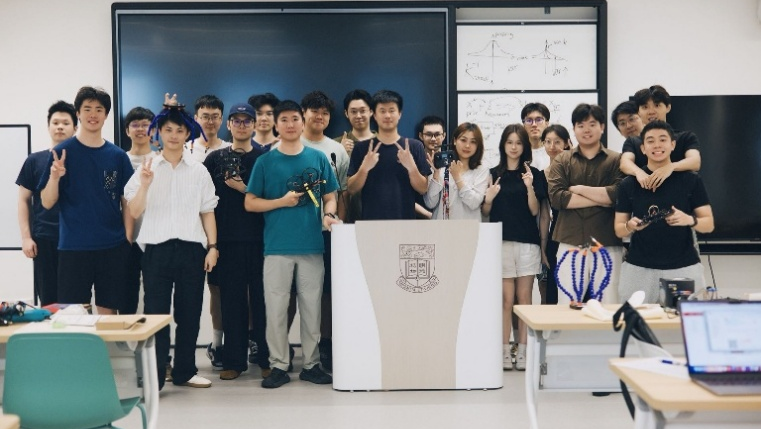
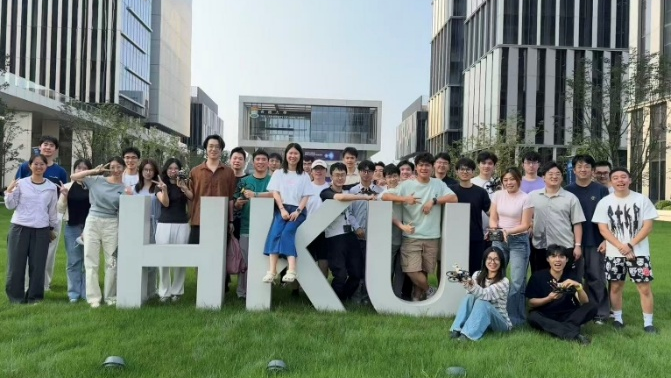
Campus Life, Laboratory Tours & Student Experience